 Kostenloser Versand ab 50 Euro
 500.000+ zufriedene Kunden
 TÜV-ShopIdent geprüft
 30 Tage Geld-zurück-Garantie

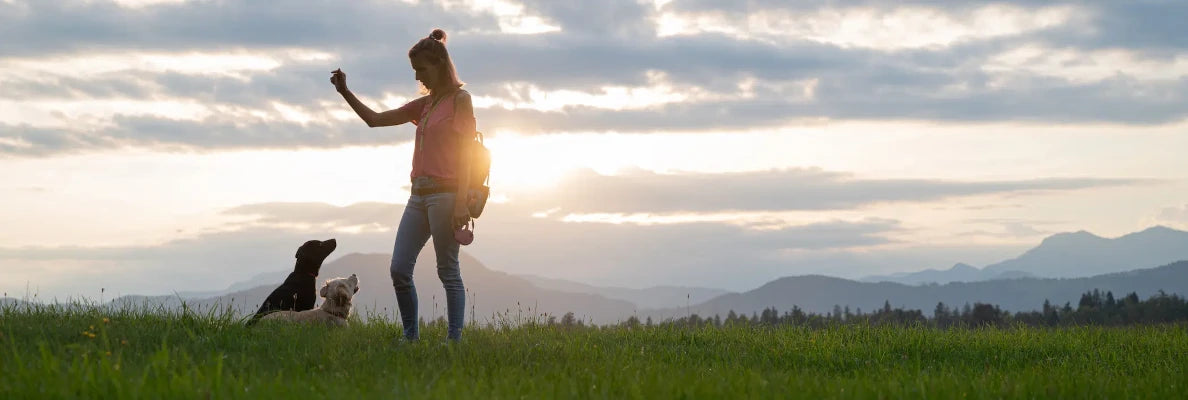
Dog Training - How Your Dog Understands You
Every dog owner must address the topic of dog training. For humans and animals to get along well, rules are essential. Furthermore, the dog must also learn how to behave when moving among large crowds and in traffic. Ideally, the rules are taught already in puppyhood. However, this is not always possible, as many people adopt adult dogs from shelters.
To ensure that training works well with both small and large dogs, the following tips are presented.
Our 12 tips for successful dog training:
- Be consistent
- Reward successes
- Introduce variety and fun
- Communicate clearly
- Don't humanize your dog
- House training
- Being alone
- Leash training
- Impulse control
- Dog barking at other dogs
- Structured training style
- Species-appropriate dog training
Scroll down to learn more about the tips…

The Author:
Annegret Ulrich
As a certified expert in handling dogs and in dog training, Annegret Ulrich has many years of experience with various canines. In addition, the author and dog lover provides tips on her own dog assistance portal.
Reading time: 5 minutes

Free E-book
10 Everyday Exercises for Your Dog
Perfect for everyday use and ideal for dog training. Download now!
Our 12 Tips for Dog Training
1. Stay Consistent
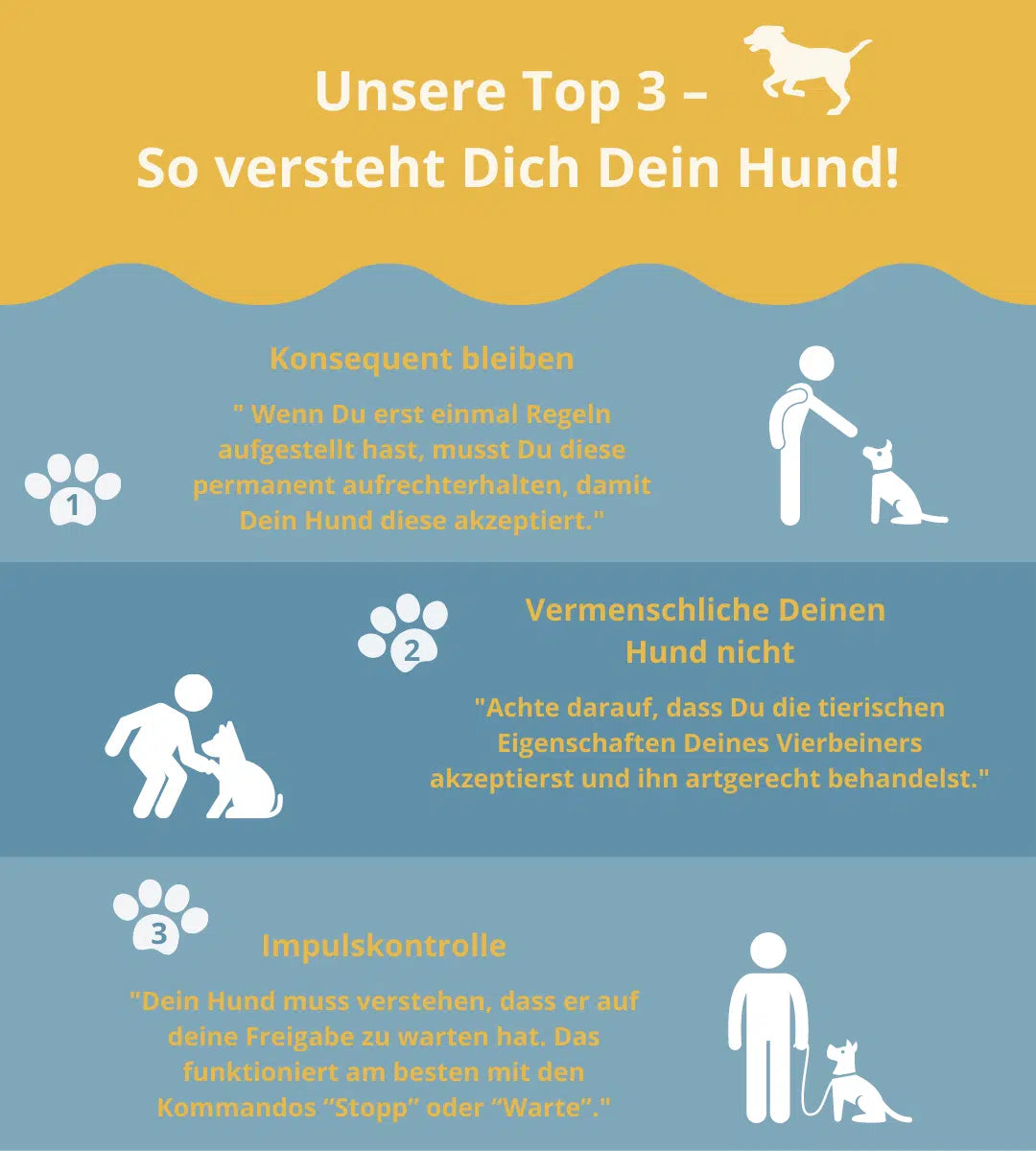
There will certainly be many situations where it's difficult to stay consistent. Once you've set rules, you need to maintain them permanently for your dog to accept them. For example, if you prevent your dog from lying on the sofa ten times and then make an exception, you can expect conflicts to arise. Your dog will then test how often they can get their way. Young dogs react to exceptions or inconsistent behavior with insecurity, which can eventually lead to fear and aggression. Even if it's a dominant dog, the owner's consistency is important. Because here it's particularly important that you make it clear who the pack leader is.
2. Reward Successes
As part of training, you should work with positive and negative reinforcement. If your dog exhibits desired behavior, you reward them, and you react with disapproval to unwanted behavior. However, reward doesn't mean your dog constantly gets treats. Your dog will surely also be happy about your praise, petting, and other forms of affection. If you know your furry friend well, you'll know exactly which of your attentions they enjoy. If your dog has done something correctly, you should clearly show them with your voice and behavior that they acted as desired. Use treats thoughtfully and sparingly. Ideally, use healthy treats that you factor into their daily food ration.
3. How do I train my dog with variety and fun?
In the context of training, it's not just about treats. Variety and fun are also important factors for achieving long-term success. Because just like with us humans, monotonous methods lead to disinterest and boredom. You will be more successful with your four-legged friend if you try new things now and then and offer your furry friend new stimuli. Here, the breed also plays a role. Some breeds need more, others less variety.
4. Dog training tips with the right communication
For training to work well, communication between you must first function. Dogs are pack animals and accustomed to communicating within the pack. Dogs interpret human signals in their own way. It's important that you react immediately to successes and failures in training so that your dog can recognize the connection. Your dog reacts to:
- Mood
- Tone of voice
- Gestures
- Commands
So, make sure you speak a clear language with all aspects.
Note: Especially for dogs with disabilities, good communication and empathy are very important. Especially with age, the risk of your dog developing a disability such as deafness increases. You can read all information on how to prevent this and also "pre-train" here: Making everyday life with a disabled dog easier
5. Don't humanize your dog
Dogs react instinctively to situations and do not think morally or logically. Make sure you accept the animalistic characteristics of your four-legged friend and treat them in a species-appropriate manner. Violence has no place in dog training either. If your dog displays misbehavior, it's no reason to be rough. Clear commands are sufficient to show the animal that you do not agree with their behavior.
6. House training
An accident here and there: That's unavoidable. So you should plan a few weeks until your dog is house-trained. It can be helpful to observe your puppy and focus on their bladder. It's usually predictable. After waking up and after eating, you should take your furry friend outside. In principle, it's advisable to take a puppy out every two to three hours.
7. Being Left Alone
First, give your dog a few days to get used to their new environment. Then, practice leaving them alone. This training consists of many small, step-by-step tasks. First, give your dog something to occupy them, such as a toy or a chew bone. Leave the room for a maximum of one minute, showing your dog that you will naturally return after a short time. Repeat this exercise. In the next step, leave the room when your dog is sleeping or grooming themselves. Even then, after several repetitions, they will understand that you will quickly return. In this way, you gradually extend your absence, making sure that you don't pay any special attention when re-entering the room, but rather that your behavior is completely natural.
Further tips on how to train your dog to stay home alone can be found in our guide " Leaving your dog alone".
8. Leash Training
A puppy must learn to walk on a leash without pulling. Start by training with a harness and a short leash. Once your dog has learned to walk at heel, you can incorporate a long line into the training to give your four-legged friend more freedom. If the puppy pulls on the leash, you should stop and wait until they have calmed down again. Only then do you continue.
9. Impulse Control
With this, you teach your puppy not to react impulsively to stimuli. Your dog must understand that they have to wait for your release. This works best with the commands "Stop" or "Wait". This is important for tricky situations, such as in traffic.
10. Dog Constantly Barks at Other Dogs
If your dog often barks at other dogs, the cause could be fear or stress. Observe your dog to see if they are barking out of joy or out of stress/fear.
Pay attention to your dog's body language. Signs of stress-barking can include:
- Panting
- Lip-licking
- Trembling
- Destroying objects
- Growling
Try to find out the cause, e.g., insecurity or protective instinct.
11. Structured Training Style
Before the puppy moves in with you, you should consider what rules you will set and consistently enforce so that the furry friend can orient themselves. If the puppy is given too much freedom, they may later exhibit dominant behavior. However, always keep in mind that a puppy can only concentrate for a short time, which is why you should not overwhelm them during training. It is a very exciting time not only for you but also for them.
12. How do I train my dog? Always in a species-appropriate way!
The article has shown that there is no personal style when it comes to this topic. Dog training is not subject to trends and only differs with regard to different breeds, some of which require more or less variety. Always be consistent, but have patience!
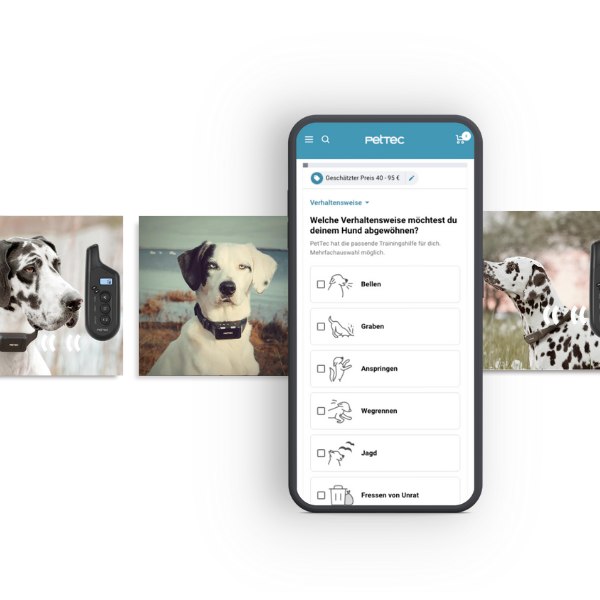
With a few clicks
Find the right training aid
Use our interactive advisor to find the right training collar for you & your dog.
📌 More interesting topics and products suitable for dog training
1: Practice consistency
On the 12 dog training tips >2: Training Collars
To the range of products >3: Dog Encounters
Tips for stopping leash barking >