 Kostenloser Versand ab 50 Euro
 500.000+ zufriedene Kunden
 TÜV-ShopIdent geprüft
 30 Tage Geld-zurück-Garantie

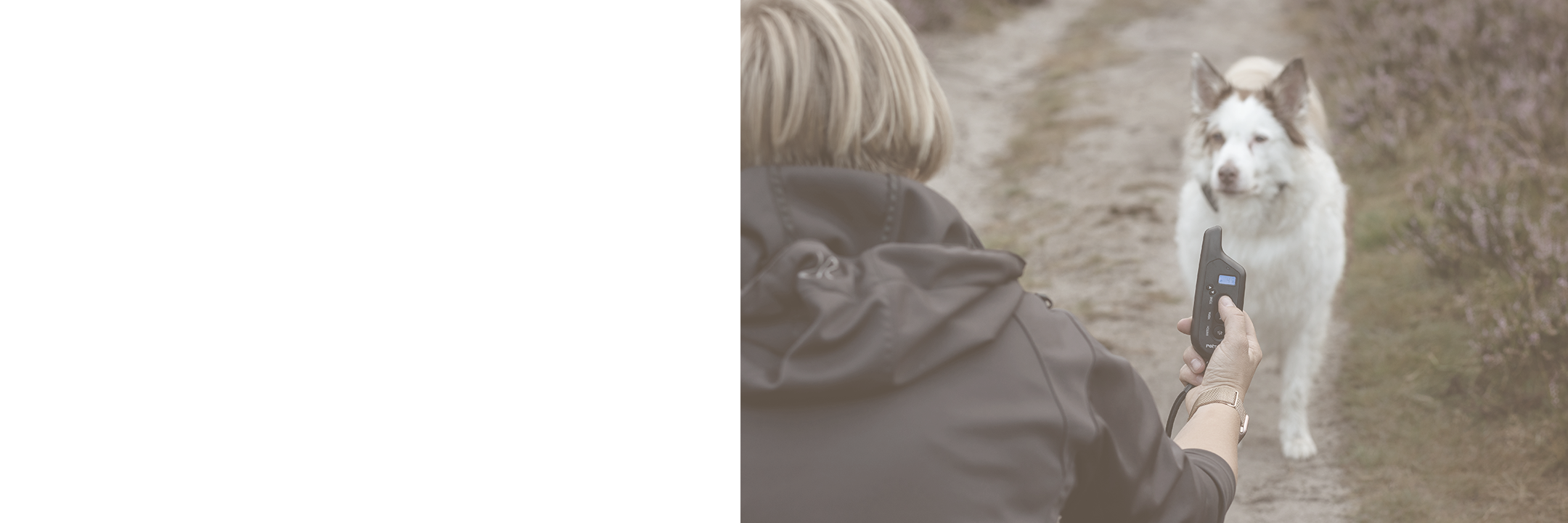
Avoiding Incorrect Associations Between Your Dog and Collar Signals
When a training collar vibrates, beeps, or sprays when your dog barks – it's doing its job perfectly. However, the specific signal may not be appropriate in all situations, as your four-legged friend might form incorrect associations in the long term. Here, you'll learn how to protect yourself from unpleasant surprises and train your dog correctly with a training collar.
- Dog must be physically and psychologically healthy
- Use training collar purposefully only
- Sufficient acclimatization period of 7 days
- Praise the animal clearly for correct behavior
Reasons for Possible Incorrect Associations
There are also times when an anti-bark trainer is used incorrectly. If your dog, for example, encounters another dog, starts barking, and thus triggers the training collar, it might associate other dogs with an unpleasant feeling in the future. In principle, there is a risk that your dog incorrectly associates the stimuli with encounters with other dogs. This is another reason why a training collar is not designed for continuous use, but should be used for a maximum of one to two hours a day.
Tips to Avoid Incorrect Associations
You should also be aware that barking itself is not wrong and is part of your dog's everyday life. After all, it has no other way to communicate acoustically. It can also be that your dog suddenly starts barking for health reasons, for example, if its hearing or sight is no longer as good. Basically, your dog should therefore be physically and psychologically healthy, which you should ideally have checked by a vet before using a training collar. Even a vet cannot look into your dog's head, but if the animal has previously lived on the street, there is a higher risk that it will associate negative stimuli with incorrect effects in the long term.
The acclimatization period is also an important factor when using a training collar. A PetTec remote trainer or anti-bark trainer must be worn in addition to the normal collar, which means additional weight on the animal's neck. An acclimatization period of at least 7 days is recommended, during which the training collar is worn but not triggered. However, this does not have to happen continuously; a few hours a day are sufficient. This time ensures that the dog does not directly associate the signals from the collar with the collar itself.
Create a framework for using the training collar. For example, if your dog regularly makes noises when a neighbor moves in the stairwell, deliberately recreate this situation so that your dog is not exposed to the training collar for too long at a time. Praising your dog when it refrains from undesirable behaviors such as barking, chasing, jumping up, or digging is paramount. From the outset, your training should therefore be based on praising correct behavior and not punishing incorrect behavior.
Discover our dog training collars
Unsure which is the right collar? Click here for an overview of all training collars

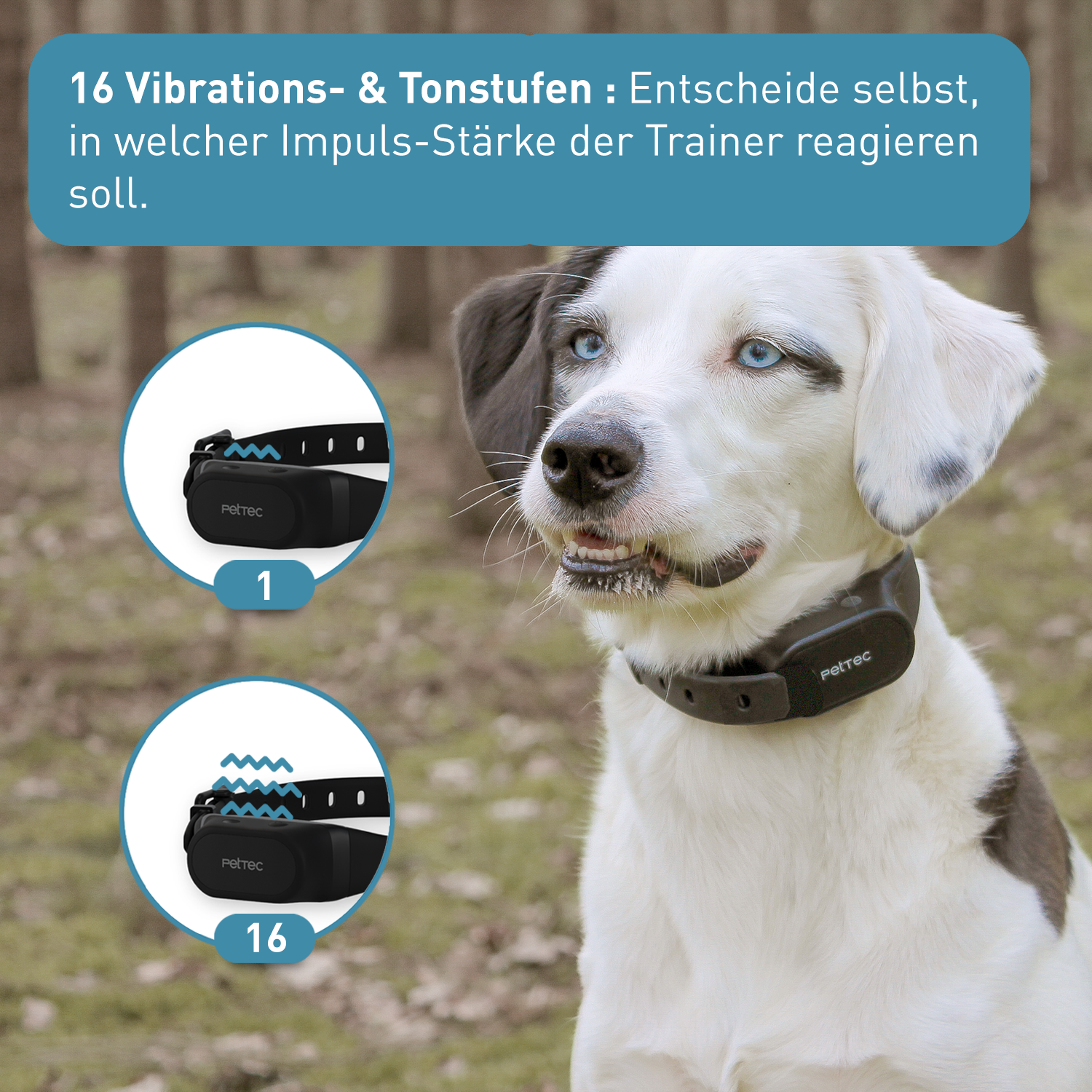
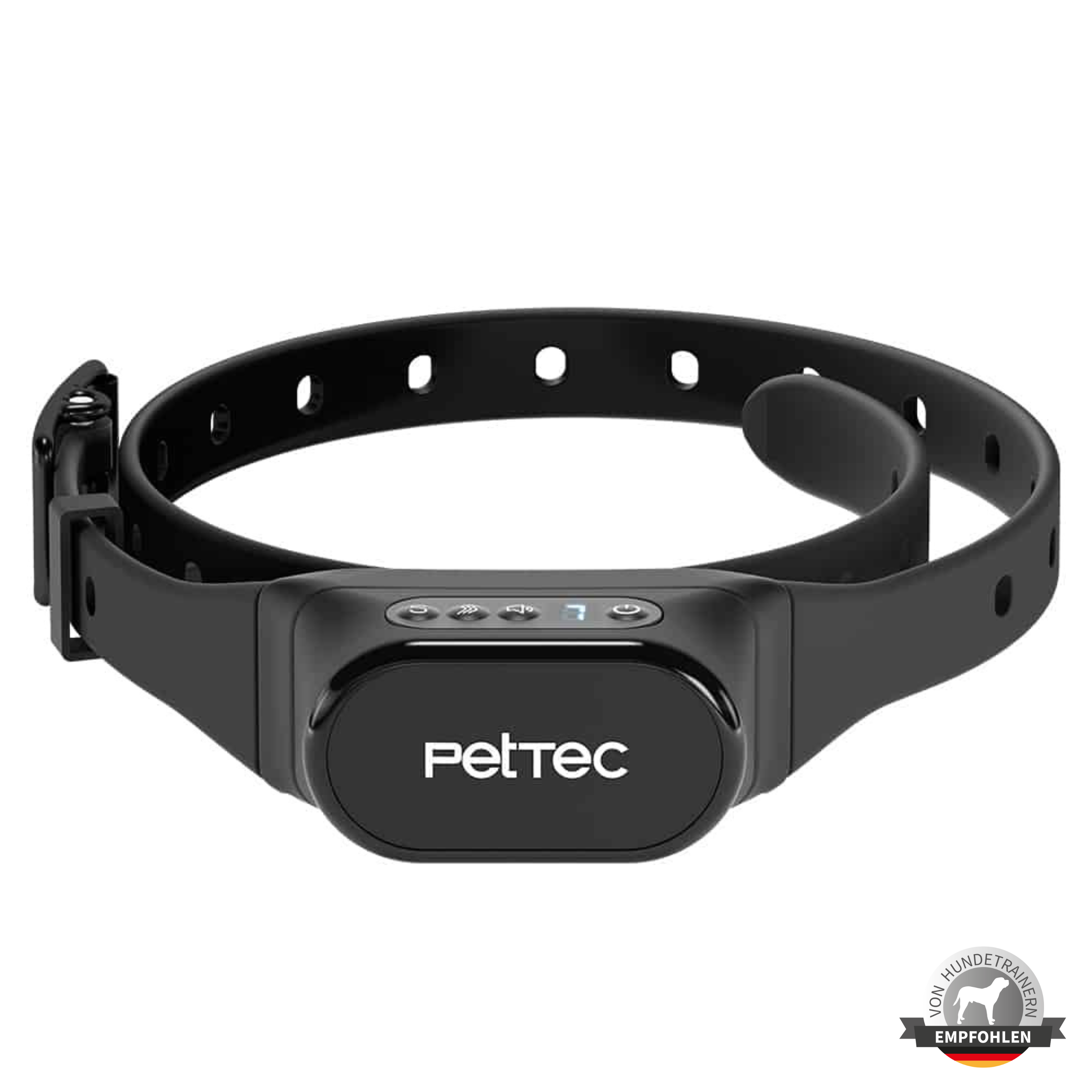


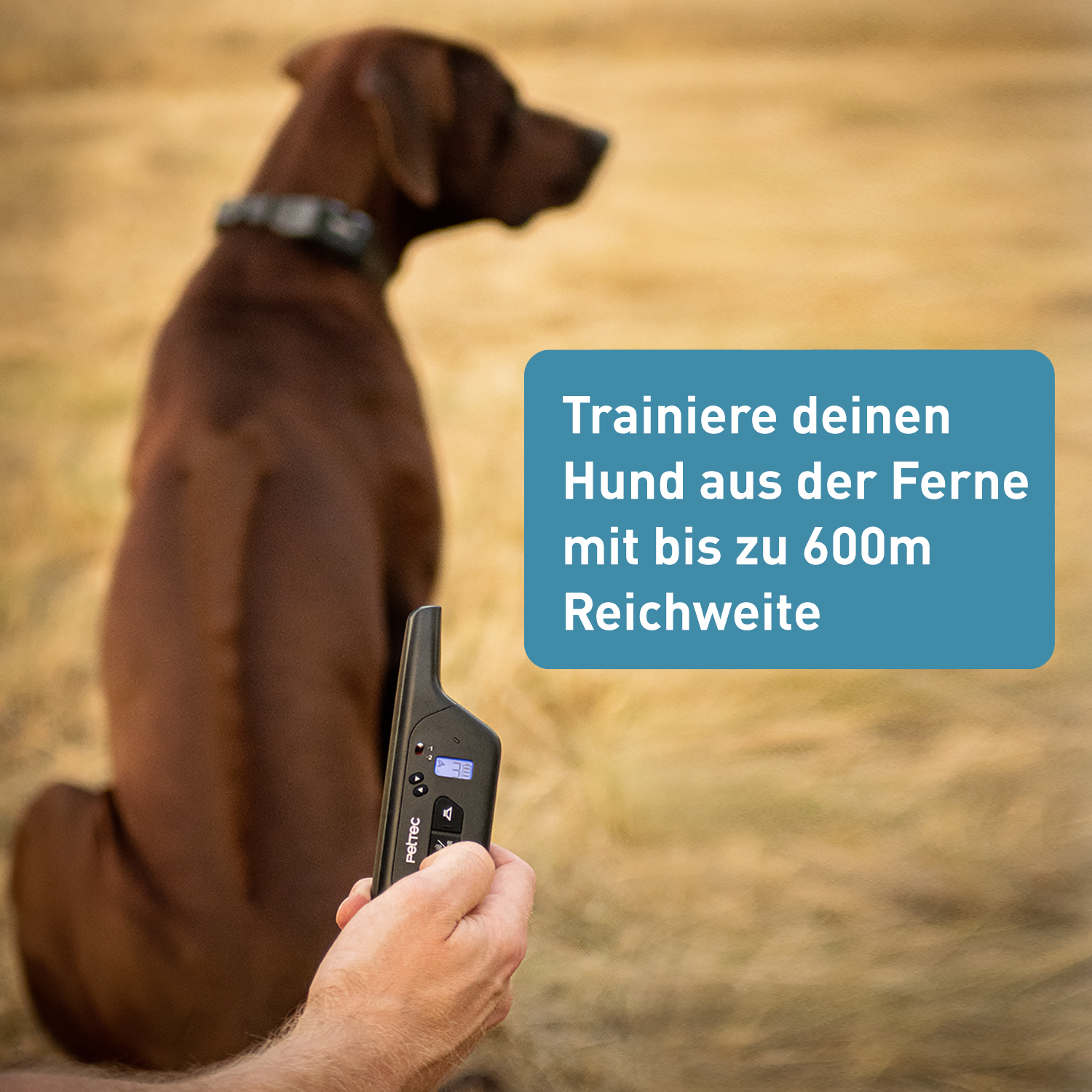

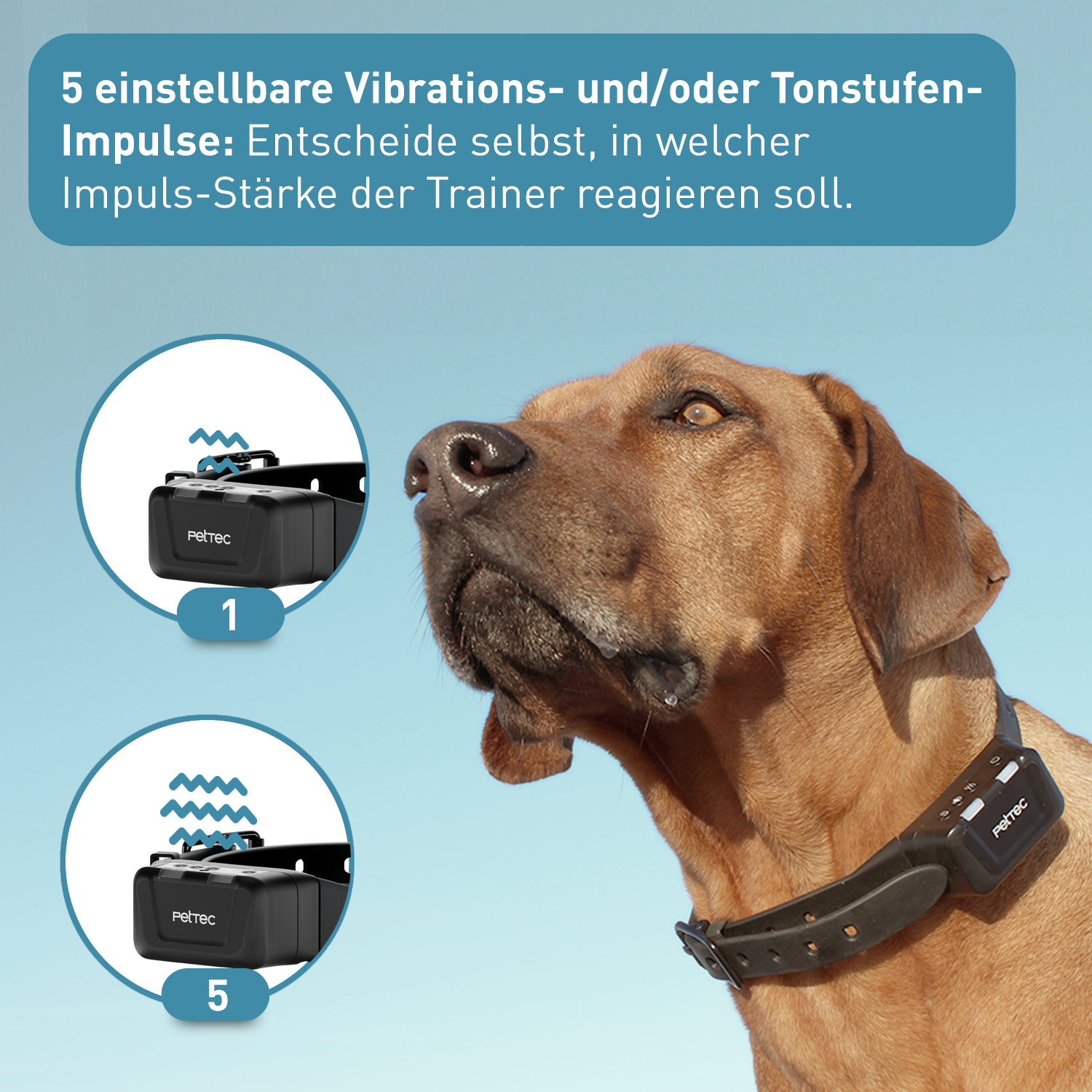
How do I use e-collars correctly?
Vibration or spray, remote trainer or anti-bark trainer, and how do I actually use the PetTec training collars correctly? We have compiled and comprehensively answered these and more questions for you here.