 Kostenloser Versand ab 50 Euro
 500.000+ zufriedene Kunden
 TÜV-ShopIdent geprüft
 30 Tage Geld-zurück-Garantie

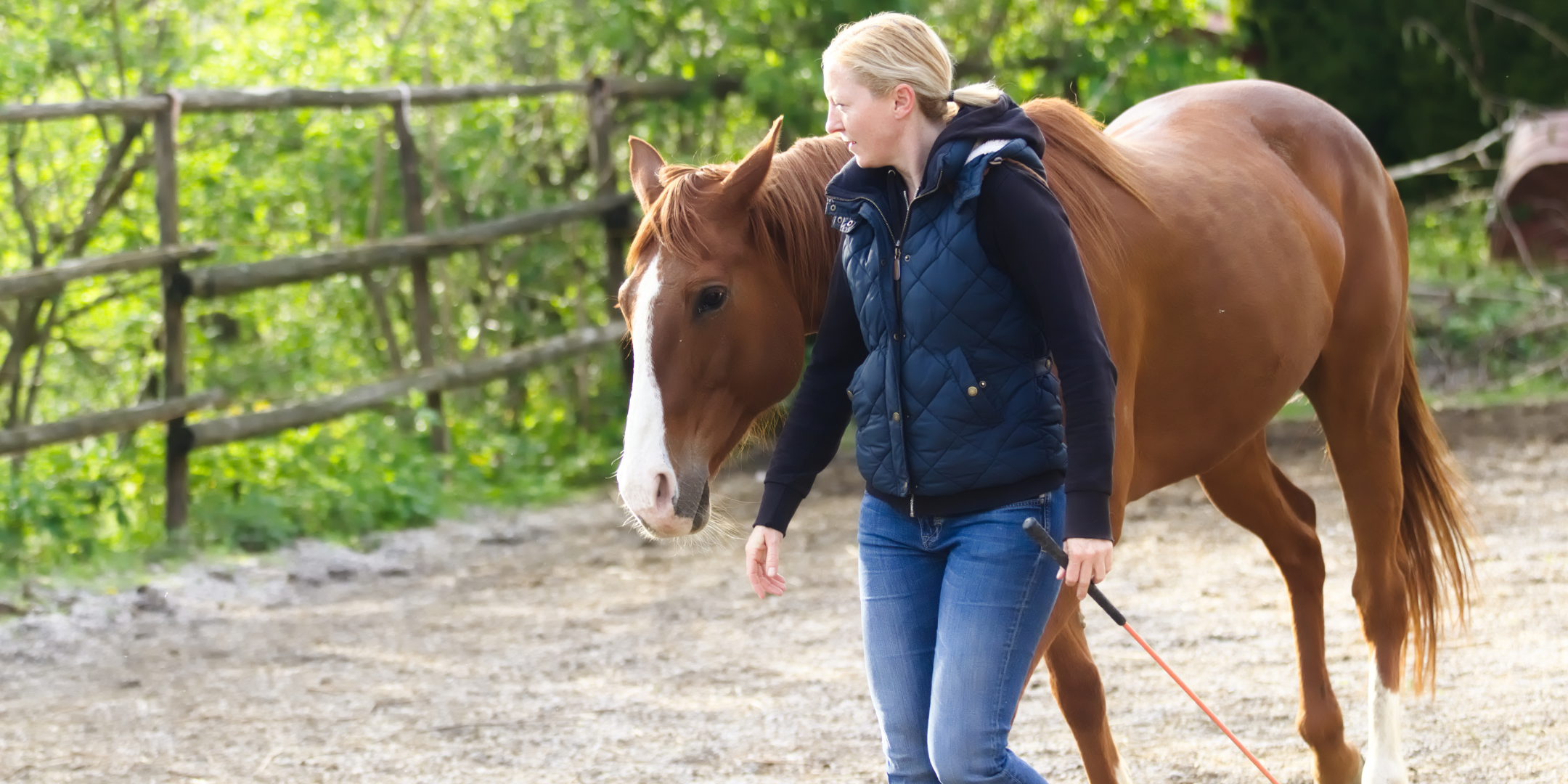
Learn how to properly train your horse – from groundwork to riding preparation
Groundwork is the foundation for all types of horse training. It strengthens your relationship with your horse, improves body language, and promotes cooperation. On this page, you'll learn how to get started with groundwork using simple exercises and what tools can help you.
💡 Tips for you:
- Horses learn at their own pace. Avoid overworking them.
- Reward desired behavior to reinforce it.
- Set clear boundaries and be consistent in your instructions.
- Horses love routine. Try to make training times regular.
🐴 What is groundwork and why is it important?
Groundwork means working with your horse without a saddle or rider. It's about building trust, understanding body language, and preparing the horse for work under saddle. It promotes balance, agility, and trust in humans.
📌 First Groundwork Exercises with Your Horse
Start with simple exercises that you can do anytime, anywhere:
- Leading and Halting:
Goal: Your horse walks attentively by your side and stops on your cue. Pay attention to clear body language, a consistent pace, and a calm demeanor.
🎯 Tip: Use a well-fitting halter and a lead rope of sufficient length.
- Lunging:
Use a lunge line. Ensure consistent speed and position. Don't just "let them run in circles" – proper lunging means communication in motion.
Maintain connection, pay attention to body language, and specifically encourage rhythm, suppleness, and responsiveness to your voice.
- Lateral Work:
Promote your horse's flexibility and suppleness through targeted sideways movements. Ideal for improving balance and agility.
With light touch or body language, you can encourage your horse to move sideways – a great warm-up and introduction to further riding training.
Why a surveillance camera makes sense...
Even when you're not there, you can watch over your horse. A smart stable camera helps you keep an eye on your horse at all times.
For example:
📹 Assessing behavior – e.g. when alone or in case of problems in the stable.
🕒 Documenting training progress. Repetition and feedback are important – camera footage shows whether exercises are effective.
👁️ Monitoring behavioral abnormalities – e.g. weaving, crib-biting, or nervousness in new situations.
Benefits of groundwork at a glance
✅ Build trust – Your horse learns to focus on you and follow you.
✅ Improve body language – You become clearer in your communication and your horse learns to understand subtle signals.
✅ Promote coordination & agility – Targeted exercises build muscles and strengthen body awareness.
✅ Mental engagement – Groundwork challenges not only the body but also the mind – ideal for restless or bored horses.
✅ Gain safety – A well-trained horse reacts more calmly in stressful situations and is easier to lead.

Horses react extremely sensitively to body signals – but you often only truly notice their reaction when you can observe them.
The advantages of the PetTec stable camera:
✔️ Motion detection – detect suspicious activity before it becomes critical
✔️ Live transmission – check on the stable from anywhere via app
✔️ Night vision function – keep an eye on everything even in the dark
✔️ Two-way communication – your horse hears your voice
✔️ Easy installation & weatherproof
Easily usable via our PetTec app & without Wi-Fi. Ideal for reflection.
What equipment do you need for ground work?
You don't need a huge riding arena – but a few things will make training easier and safer:
- Well-fitting halter or rope halter
- Lead rope or ground work rope
- Lunge line for advanced exercises
- Spacious, safe area with a non-slip surface
- possibly a camera for training observation, if you train alone or want to document your progress
Do you have any further questions?
Perhaps you'll find what you're looking for here...
Colic is one of the most common equine emergencies. Stay calm, call the vet immediately, and avoid moving the horse unnecessarily. Only lead it if it remains calm. A stable camera can help detect early signs such as restlessness or frequent lying down.
Horses often show pain through:
- Restlessness, sweating, loss of appetite
- Pawing, flehmen, frequent turning
- Atypical movements or postures
A stable camera with motion detection can help to capture these signals even in your absence.
Whenever you are unsure – it's better to be safe than sorry. Especially in cases of suspected colic, severe bleeding, fever, or lameness, professional help should be sought immediately. Tip: You can transmit initial impressions to the vet via a livestream from the stable camera.