 Kostenloser Versand ab 50 Euro
 500.000+ zufriedene Kunden
 TÜV-ShopIdent geprüft
 30 Tage Geld-zurück-Garantie


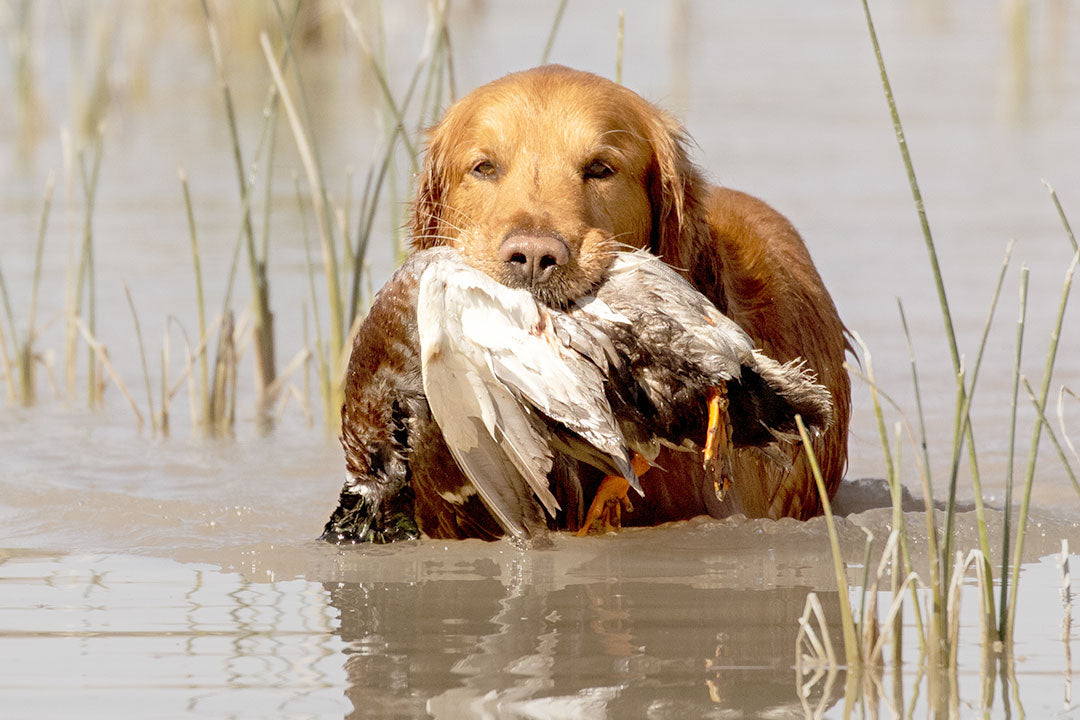
Breaking a dog of its hunting instinct
Has your dog chased animals before? Does your dog ignore you outdoors? These are signs or effects of your dog's normal hunting instinct.
The following exercise steps will help you improve recall training for your dog:
- Use the rewarding "food hand" as an effective tool for your furry friend.
- Teach your furry friend effective heel commands.
- Use specific "lures" (e.g., a favorite toy) to distract and "redirect" your dog.
Scroll down to learn more about the tips and information...
Recognizing the Right Signs of Hunting Instinct
A puppy's hunting instinct often becomes visible at an early age, between 8 and 16 weeks. As a specific primal instinct, it is just as much a part of a dog's nature as the social herd or pack instinct, as well as the territorial and sexual instincts. Once the domestic quadruped reaches six months of age, the hunting instinct develops further. Therefore, it is important at this early age to unmistakably recognize the significant symptoms of the canine hunting drive.
The species-typical signs of the development of the hunting instinct in your young furry friend are clearly evident:
- in the hunting sprint towards suddenly appearing small birds
- in playful chasing of other dogs
- in intense sniffing and intense digging in pursuit of small creatures like mice
- in extreme cases, in obvious poaching of deer, rabbits, and hares
The natural hunting instinct is particularly pronounced in special dog breeds like the "English hunting dog." However, a pronounced hunting behavior is no less typical for small hunting dogs. Two smaller, widely known dog breeds that exhibit a strong hunting instinct are the Wire-haired Dachshund and the Fox Terrier. External characteristics for hunting dogs, such as the Irish Wolfhound, are long noses or large hanging ears.
There are also dogs that have a smaller, less pronounced hunting instinct and are therefore better suited for inexperienced dog owners. You can find more details in this article: Calm Dogs Without a Hunting Instinct



Why should you train your darling out of their hunting instinct?
Probably the most significant "personality trait" for dogs – especially in hunting breeds – is optimal impulse control. This ethological term means that your furry best friend is able to effectively control their feelings and behavioral instincts. Given the sometimes very strong hunting instinct, it also becomes relevant that you cannot let your dog run freely with their hunting drive in every situation.
Good to know: Hunting instinct makes dogs happy
Your four-legged friend's natural hunting instinct is a genetically determined primal instinct. When a dog acts on its hunting drive, it's often not even about the prey itself. Simply the sprinting pursuit of your dog when wild animals appear releases the body's own happiness hormones (endorphins), which do your agile furry friend a lot of good. In addition, there is the balanced physical exertion and movement, which are simply essential for the health of your four-legged darling.
Your anti-hunting training for dogs
Our detailed step-by-step guide
#First Step
Generally, every furry friend learns best through play. For this reason, the innate play drive in puppies can ideally be incorporated into targeted anti-hunting training at the same time.
For example, hide nearby when you are out with your furry friend in the wilderness. This encourages your dog to track you down in the bushes. As soon as he has found you, reward him with a tasty treat or his favorite toy. Through these efficient reinforcements, your loyal four-legged friend simultaneously learns to focus on you as his owner first when faced with challenging stimuli that trigger hunting behavior. This very first training goal is a fundamental step for the ongoing behavioral development in anti-hunting training.
#Second Step
Teach your beloved pet orienting heel commands through further exercises. This clearly conveys the message to your puppy that he is not allowed to react uncontrollably, "just like that," to environmental stimuli.
Your beloved dog should intuitively grasp that he must – on every occasion – first wait for your clear commands for release. Such effective, behavior-controlling commands include "Down!", "Heel!", "Wait!", "Stop!" or supplementary instructions for recalling the dog. Use your dog treats or other rewards situationally again for reinforcing behavioral conditioning.
#Step Three
Increasingly use supportive lure objects (perhaps a favorite toy) to redirect your dog's concentration towards your active training commands. This way, you increase the chances of success for your specific puppy training to curb the species-specific canine hunting instinct. You will learn about additional tools you can use to increase the efficiency of all your exercises later.
These little helpers can support you in your training
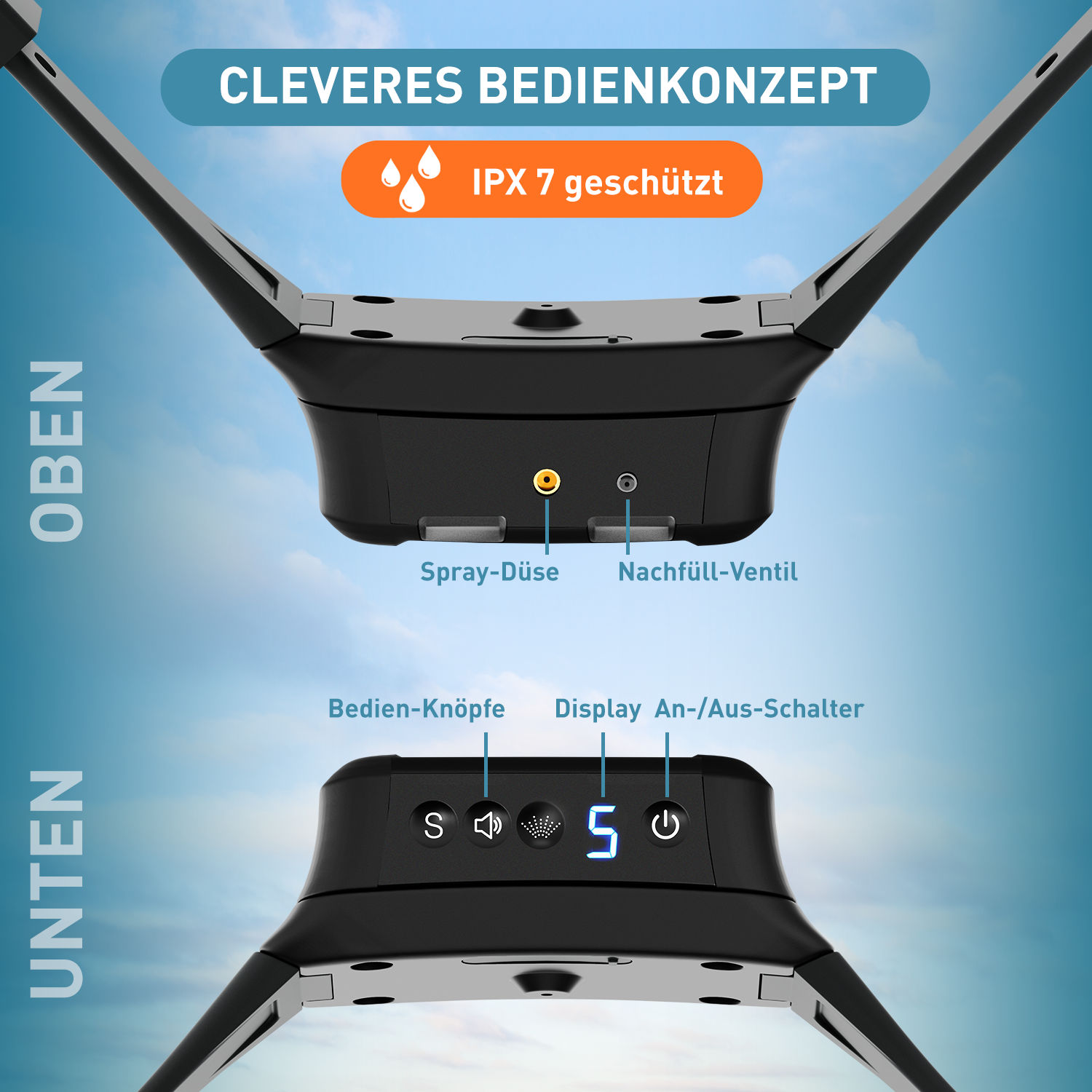
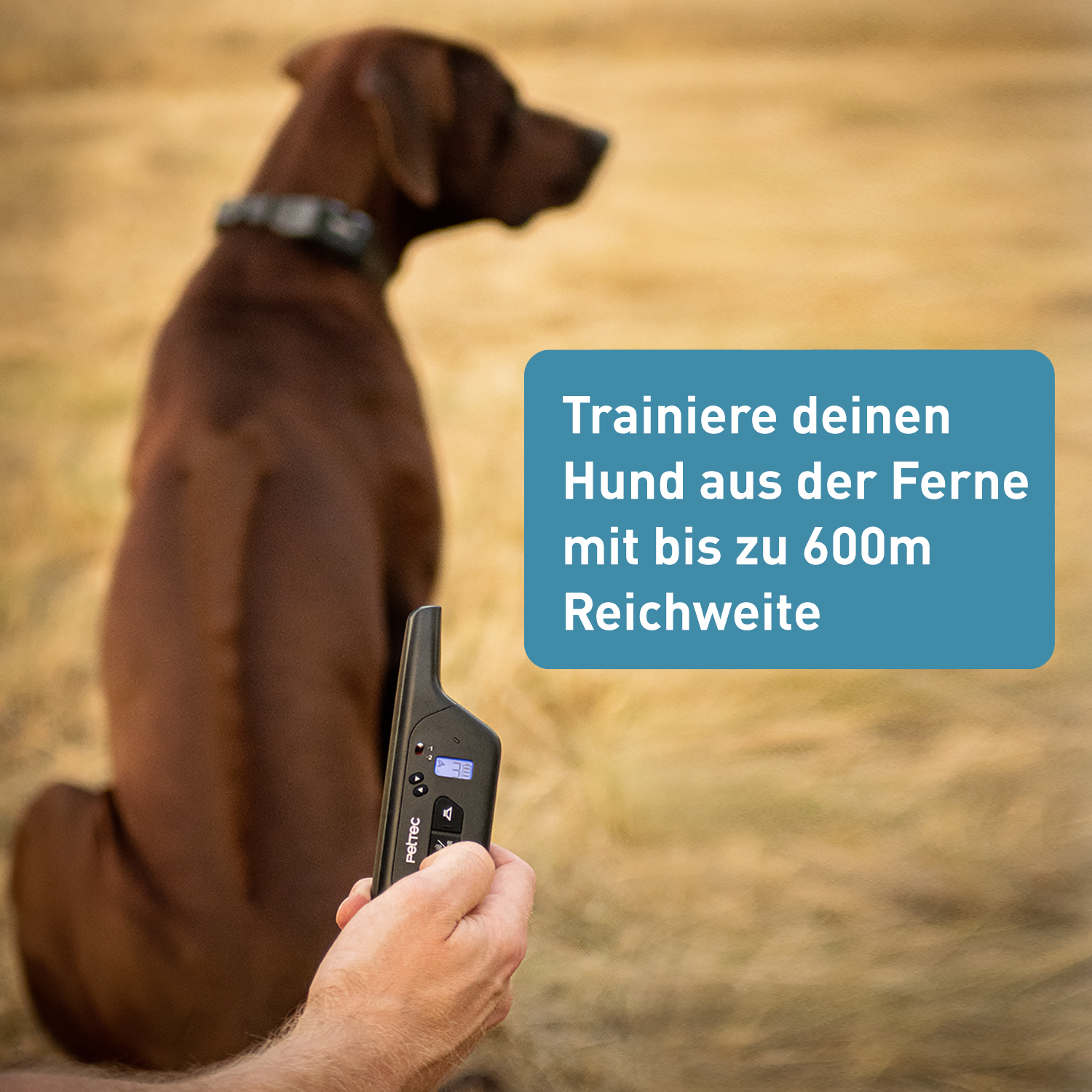
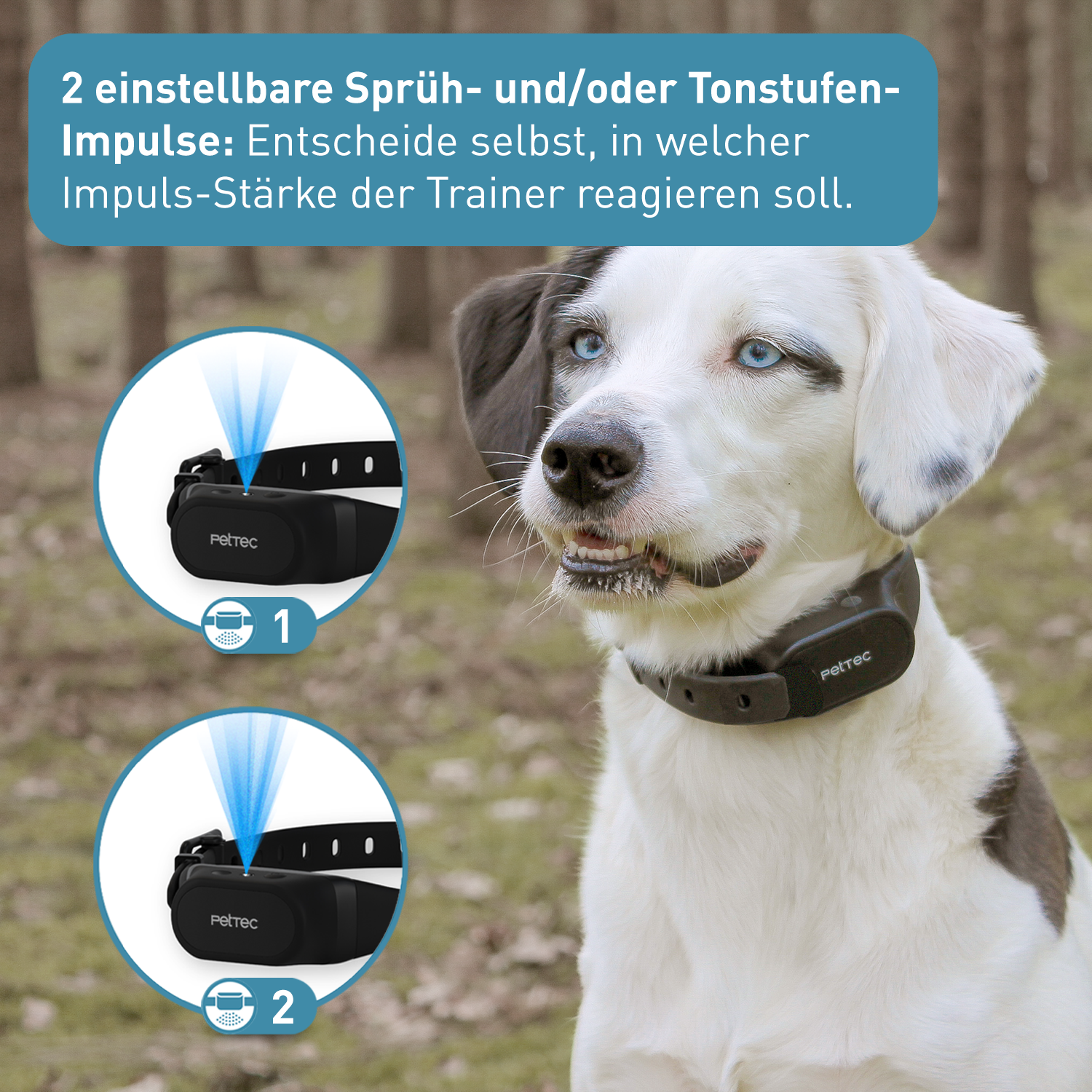
An anti-hunting collar or recall training for dogs with a long leash are effective tools to help your dog unlearn its hunting instinct.
How the anti-hunting collar works
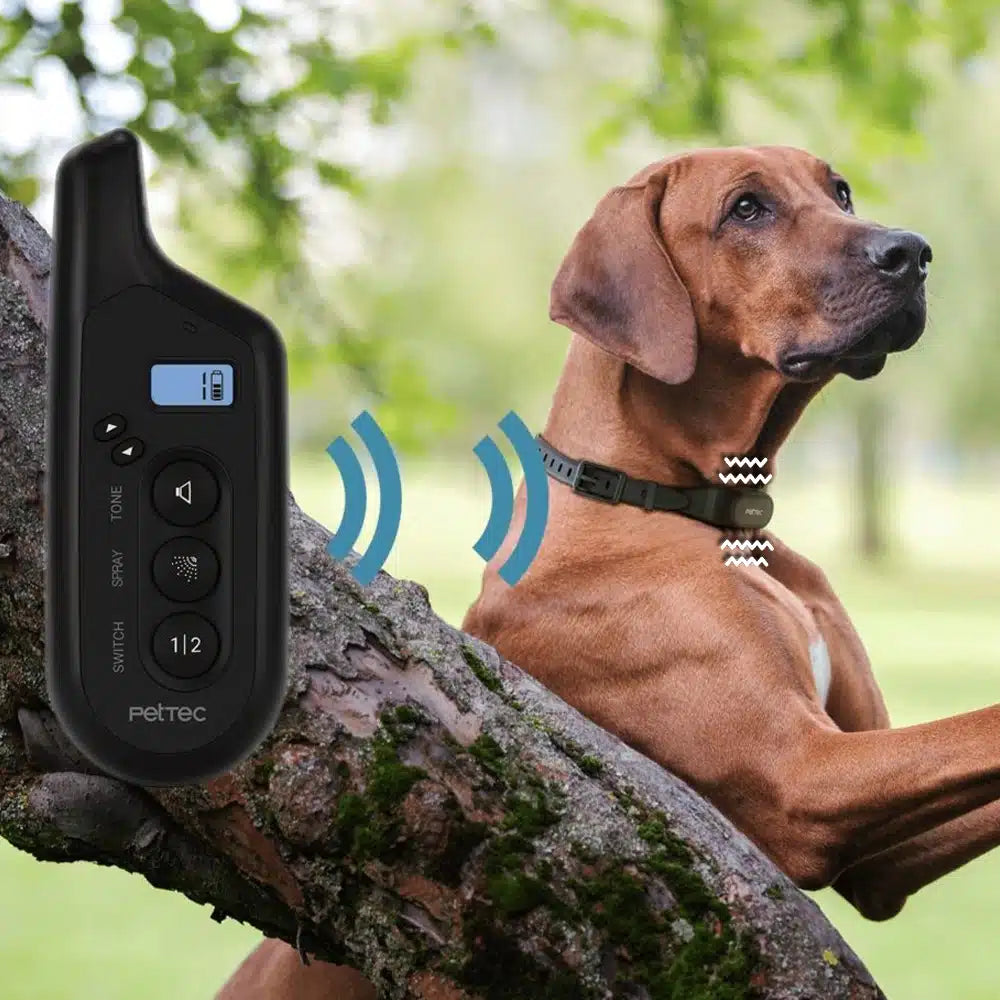
At the press of a button by the dog owner, an electrical stimulus is triggered on the dog's collar. This usually happens when the dog exhibits behavioral errors. With the help of this vibrator collar, the dog owner should be better able to train their dog out of unwanted hunting behavior.
The function of the long leash in controlling hunting instinct
A flexible long leash allows for balancing between the necessary free movement of the dog and the required safety. This way, you have optimal control over your agile furry friend until it can run freely after successful anti-hunting training.
Frequently Asked Questions
Proactively use a vibrating anti-hunting collar or a long leash to better control your dog during walks.
Impulse control means that your dog knows how to control his actions and emotions. For example, your dog is playing with a soft toy, and you call him. Now he can choose between two options: ignoring your call or stopping the game and coming to you. If your dog comes to you, he has his impulse (playing) under control.
Your dog's prey drive is genetically determined. Your dog does not aim to kill the prey. But your dog is seeking a state of happiness. And he finds that in chasing. Chasing releases endorphins. That makes your dog happy.